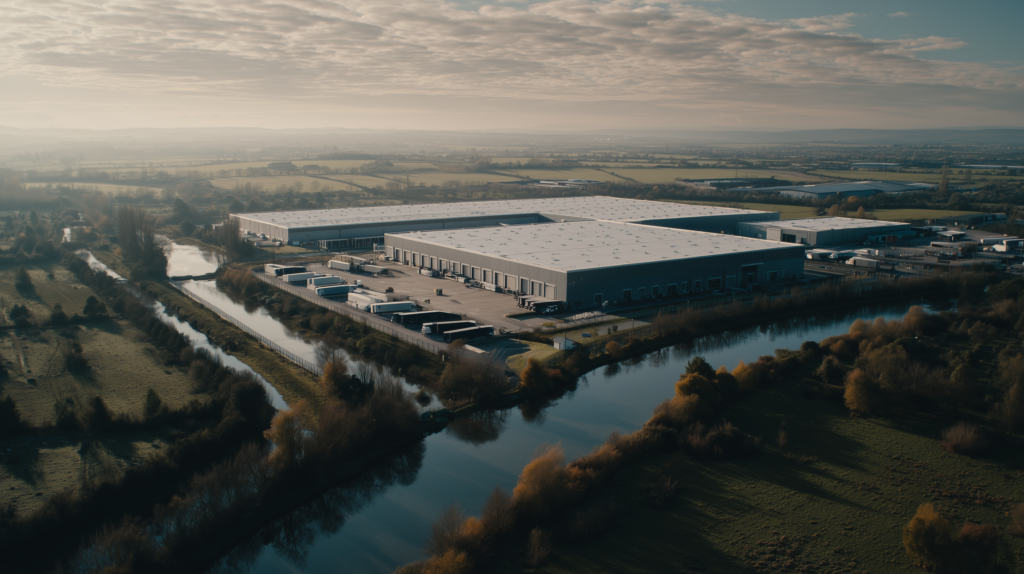
Unlocking Development Potential: Planning Small Commercial Sheds & Industrial Units
For prospective clients considering building B2/B8 units, understanding both the market opportunity and planning requirements is critical. With careful consideration of land selection, planning policy, and design, it is possible to bring a commercial project to life and maximise its long-term value of sites.
Land Opportunity in the UK
Identifying the right site is one of the most important early decisions. There is significant latent potential in brownfield land, according to the Countryside Charity (CPRE), England now has capacity for about 1.48 million new homes on previously used land, with more than half already having planning permission in principle. (cpre.org.uk)
While these statistics relate to housing, the principle applies to industrial units, brownfield sites embedded within urban areas often have access to existing infrastructure, making them strong candidates for light industrial development or ‘Sheds’. Redeveloping such sites also aligns with local authority strategies, supporting regeneration in underused areas and promoting employment opportunities.
Greenfield sites, by contrast, offer flexibility in size and layout but face stricter scrutiny. Planners will evaluate environmental impact, integration with the local area, and how an industrial use fits within broader land-use plans. According to government land-use data, only 8.7% of England’s land is classed as ‘developed use,’ highlighting the relative scarcity of suitable sites. (gov.uk)
Understanding What Planners Are Looking For
Once a potential site is identified, the focus shifts to design and compliance. Planning authorities assess proposals for massing, scale, and position, ensuring new buildings sit comfortably within their context and do not dominate neighbouring properties. Materials are also critical, structures should be durable, appropriate to their surroundings, and contribute positively to the site’s character. Practical considerations, such as access, circulation, and operational functionality, are equally important.
Local and national policies emphasise efficient land use, integration with infrastructure, and minimising environmental and visual impact. Planners particularly favour brownfield sites, sustainable design practices, and developments aligned with wider strategic objectives. By designing with these priorities in mind, clients improve the likelihood of approval, ensuring that the building is both functional and contextually appropriate.
Navigating Planning and Policy
Even for small industrial units, the planning process can be complex. Early engagement, such as pre-application advice, can clarify potential hurdles and highlight areas where design adjustments may be needed. Understanding policy requirements in advance reduces the risk of delays or refusal and allows the project to progress confidently. Professional guidance helps translate site potential, planning expectations, and operational needs into a cohesive, compliant proposal.
At Walters Architects, we believe that industrial buildings deserve thoughtful design, not just for efficiency, but for long-term value and integration. We bring clarity, experience, and a design-led mindset to each project, helping clients move confidently from site acquisition through to construction. If you’re planning a new industrial unit, visit our industrial website, or call our Leicester (0116 254 1830) or Oakham (01572 335066) office to arrange an initial consultation.